
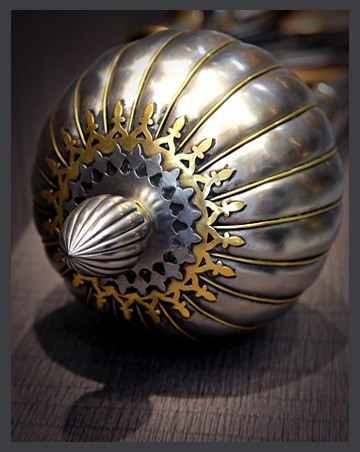
Shree Amritsar Sword, Swords, Wedding Swords
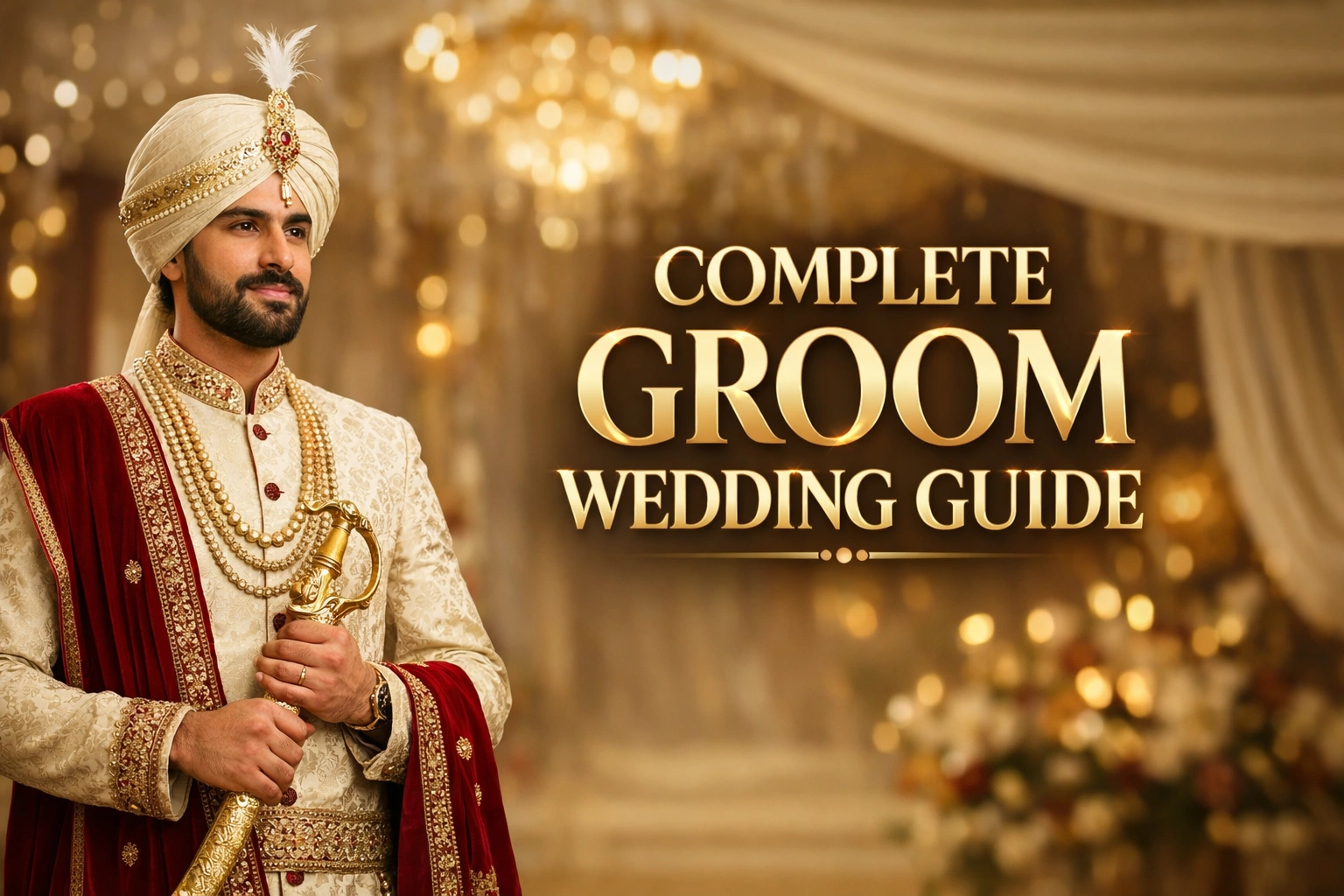
Complete Groom Wedding Accessories Guide 2025: Sherwani, Sehra, Jutti & the Ceremonial Sword
Let’s be honest — everyone obsesses over the bride’s outfit. Her lehenga, her jewellery, her dupatta — planned months in advance, fitting after fitting, the whole family involved.
And then there’s the groom, Googling “what to wear at Punjabi wedding” three weeks before the date.
If that sounds familiar, you’re not alone. But here’s the thing: a Punjabi groom’s look is just as layered, just as meaningful, and honestly — when done right — just as breathtaking as the bride’s. Every piece you wear on your wedding day carries centuries of tradition, cultural pride, and the kind of symbolism that makes your baraat photos look like they belong in a royal portrait gallery.
This guide covers everything — from your sherwani to your sehra, your jutti to your jewellery — and ends with the one accessory that no other wedding tradition has quite like Punjab does: the ceremonial sword.
Let’s get into it.
First, Why Punjabi Groom Accessories Are in a League of Their Own
When someone searches “groom wedding accessories,” they usually find generic advice — tie bars, pocket squares, leather shoes. Nice. Fine. Completely forgettable.
A Punjabi groom’s accessories are different. They’re not afterthoughts. Each one has a name, a ritual associated with it, and a reason for its existence that goes back hundreds of years. Your sehra is tied by your sister during the sehrabandi ceremony. Your sword connects you to warrior ancestors who rode horses to their weddings carrying it. Your kara is a declaration of faith you’ll wear for the rest of your life.
These aren’t accessories. They’re armour. And understanding each one makes wearing them feel completely different.
1. The Sherwani — Where Your Royal Look Begins
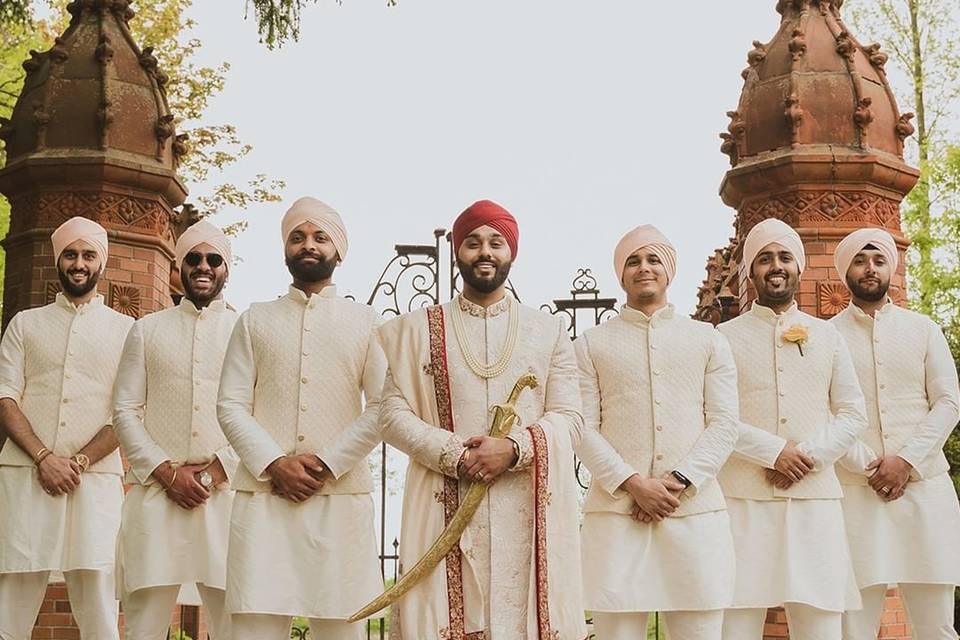
The sherwani is the foundation of everything. Get this right, and everything else falls into place beautifully.
For 2025 Punjabi weddings, the sherwani is still the undisputed choice for grooms — but the details have evolved. Grooms are moving beyond plain ivory and experimenting with deep jewel tones: burgundy, forest green, midnight navy, and rich gold. The embroidery is heavier than ever, with zardozi and intricate beadwork doing most of the talking.
What to actually look for when choosing yours:
Colour — Ivory and champagne are timeless and photograph beautifully in daylight. If your wedding is in the evening, go bolder — deep maroon, royal blue, or gold give you that dramatic, lit-up look that makes for incredible baraat photos. One practical tip: coordinate loosely with your bride. You don’t need to match exactly, but complementary colours look stunning in couple portraits.
Fabric — Silk brocade is the gold standard. It has weight, structure, and the kind of sheen that catches light perfectly. Velvet works beautifully for winter weddings (Punjab’s wedding season runs November to February for a reason — the weather is perfect for heavier fabrics). Raw silk is a great middle ground if you want something with texture but not too formal.
Embroidery — Heavy zardozi and zari work for the main ceremony. Save lighter pieces for the mehndi or sangeet. There’s nothing worse than saving the simple sherwani for the wedding and the ornate one for the sangeet.
Fit, above everything else — A ₹50,000 sherwani that fits badly will look worse than a ₹15,000 one that’s perfectly tailored. Get at least two fittings. The shoulders should sit clean, the chest should have room to breathe, and the length should fall to mid-calf without bunching.
Sword pairing note: Your sherwani colour determines everything about which ceremonial sword looks best. Gold sherwani → gold hilted talwar. Maroon sherwani → red and gold kirpan. Navy → silver finish. We’ll come back to this in detail.
2. The Sehra — The Moment Everyone Looks at You
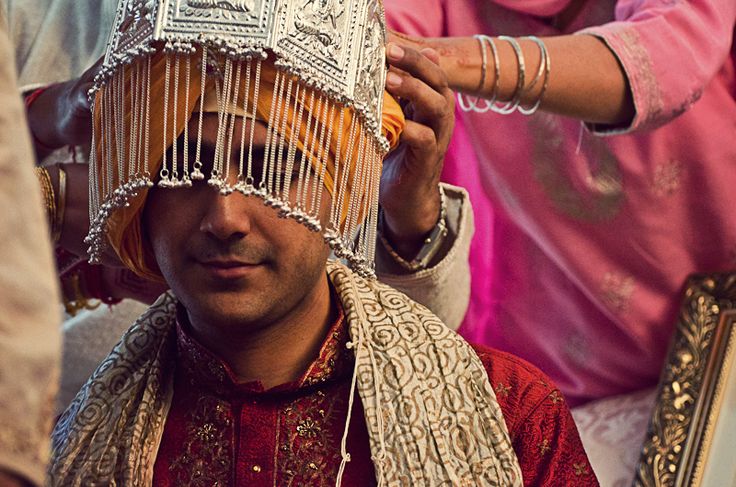
Ask any Punjabi mother what makes her son look most like a groom, and she’ll say: when the sehra goes on.
The sehra is the decorative headpiece — strings of flowers, pearls, or metallic threads — worn over the turban, hanging down to partially veil your face. It transforms the look completely. Practical? Not particularly. Incredible in photos? Absolutely.
In a Hindu Punjabi wedding, it’s traditionally your sister who ties the sehra on your head during the sehrabandi ceremony — one of the most emotional moments of the entire wedding for the family. It happens just before the baraat begins, and by the time she’s done, the tears are flowing and the dhol is beating and you’re riding out on a ghodi like you were born for this.
Choosing your sehra:
Fresh flower sehra — Marigold and mogra are traditional, and honestly nothing smells better or photographs more warmly than fresh flowers. The downside: they wilt over a long day. Best for morning or early evening ceremonies.
Pearl sehra — White pearl strings give a regal, formal look that works beautifully with ivory or champagne sherwanis. Doesn’t wilt, stays perfect all day.
Zardozi sehra — Gold metallic embroidered fabric with hanging threads. Increasingly popular with grooms who want something unique and lasting. You can keep it as a memento, unlike fresh flowers.
One tip nobody tells you: Order the sehra 2–3 weeks in advance, not the week before. A good one takes time to make, and rushing it shows.
3. The Pagri — Your Honour, Tied in Fabric

If there’s one thing Punjabi culture holds sacred for a man, it’s his pagri. It’s not a hat. It’s not just an accessory. It’s a symbol of honour, dignity, and identity that has no equivalent in any other culture’s wedding tradition.
The turban is one of the most defining elements of a Punjabi groom’s ensemble, and the style you choose says something about who you are.
The Patiala shahi pagri is the most popular choice for Punjabi grooms — large, fan-shaped, structured. It comes from the royal courts of Patiala and carries that regal weight visually. When you walk into your wedding venue wearing one, people notice.
The morni style is softer and more relaxed — often chosen for pre-wedding functions like the sangeet or mehndi, where you want to look dressed up but still be able to dance for five hours straight.
Colour coordination: Most families coordinate the pagri colour with the bride’s outfit, or at least with the bride’s dupatta. It creates a visual harmony in photos that no amount of editing can replicate. If your bride is wearing a fuchsia lehenga with gold work, a complementary cream-and-gold pagri ties everything together.
Practical reality: Have your pagri tied fresh on the wedding day by someone who knows what they’re doing. A pagri that’s been stored folded looks like a pagri that’s been stored folded. Budget 45 minutes for this — a good pagri tie takes time.
4. The Jutti — Your Feet Deserve Royalty Too
Here’s something most grooms underestimate until they’re standing for six straight hours: your shoes matter enormously.
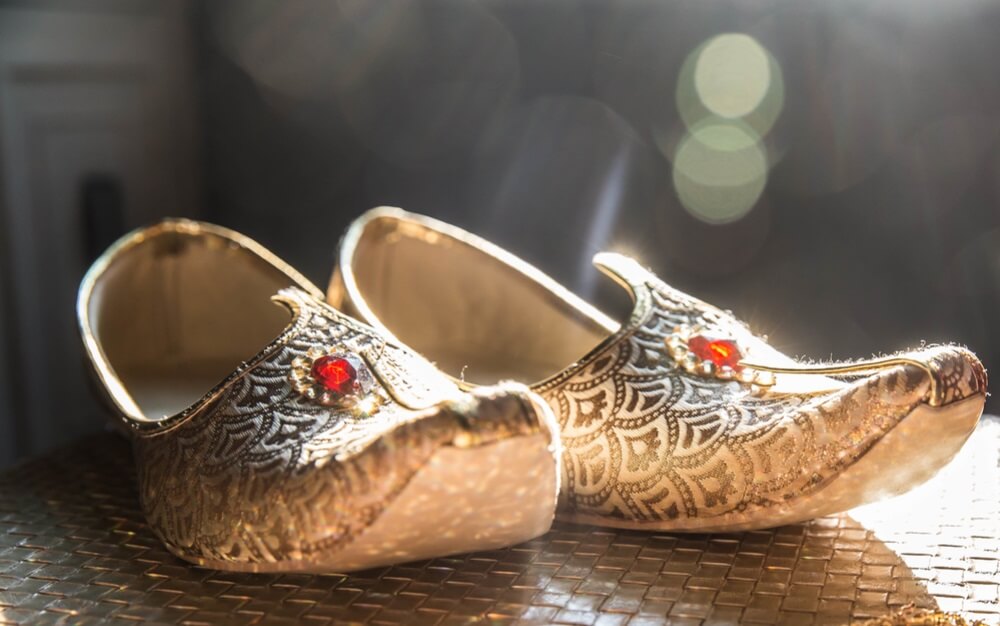
The jutti — a traditional handcrafted Punjabi shoe with embroidered leather and that signature slightly upturned mojari toe — is the right choice for a wedding sherwani, full stop. Modern loafers with a sherwani look wrong. Juttis look right.
The joota chupai tradition, where the bride’s sisters steal your shoes during the ceremony and hold them for ransom until you pay up, is one of the most joyful moments of a Punjabi wedding. You haven’t really had a Punjabi wedding experience until you’ve spent twenty minutes negotiating with your new sisters-in-law over what your own shoes are worth.
What to look for in a wedding jutti:
The embroidery should complement your sherwani — gold thread with an ivory sherwani, silver with darker tones. The mojari toe is non-negotiable for authenticity. And please — wear them around the house for a few days before the wedding. New juttis are stiff. Breaking them in saves you from genuine misery during the pheras.
One more thing: Buy a backup pair for the reception if you can. After a full day of ceremonies, having fresh footwear for the evening is worth every rupee.
5. Groom Jewellery — Less Is More, But More Than You Think
Punjabi grooms in 2025 are wearing more jewellery than previous generations — and it looks incredible when done with intention.
The kara is non-negotiable for Sikh grooms. One of the Five Kakaars given by Guru Gobind Singh Ji, the kara is a steel bracelet worn on the right wrist that carries deep spiritual significance. On your wedding day, many grooms choose a specially polished or engraved kara — something you’ll wear every day after as well. Browse our Sikh kara collection here if you’re looking for one that suits your wedding look.
The mala or kanthi — a necklace worn close to the collar — adds elegance without competing with the sherwani embroidery. Gold or pearl, kept simple.
The kalghi — the brooch pinned to the front of your turban — is the crown jewel of the entire look, literally. Choose one with stones or gold filigree work that catches the light. In photos, it draws the eye exactly where you want it.
The ring — more grooms are making a statement with their wedding ring than ever before. A thick gold band or a statement piece on the right hand works beautifully.
The rule of thumb: one statement piece (kalghi), one meaningful piece (kara), and one subtle accent (mala or ring). Beyond that, you risk looking overdressed.
6. The Dupatta — The Final Flourish

The groom’s dupatta — sometimes called a stole — is draped across the sherwani and adds a layer of colour and movement to the look. It’s typically in a contrasting or coordinating colour to the sherwani itself.
In Sikh ceremonies, the palla plays a much more sacred role. During the Anand Karaj — the Sikh wedding ceremony — the groom holds one end of the palla while the bride holds the other, and together they walk the four lavaan (rounds) around the Guru Granth Sahib Ji. Each round represents a stage of the spiritual journey of married life. By the time the fourth lav is complete, you are married — and the palla you’re holding connects you physically to that moment for the rest of your life.
Don’t choose your dupatta/palla carelessly. It deserves the same attention as the rest of your outfit.
7. The Ceremonial Sword — The Accessory That Makes a Punjabi Groom Truly Complete
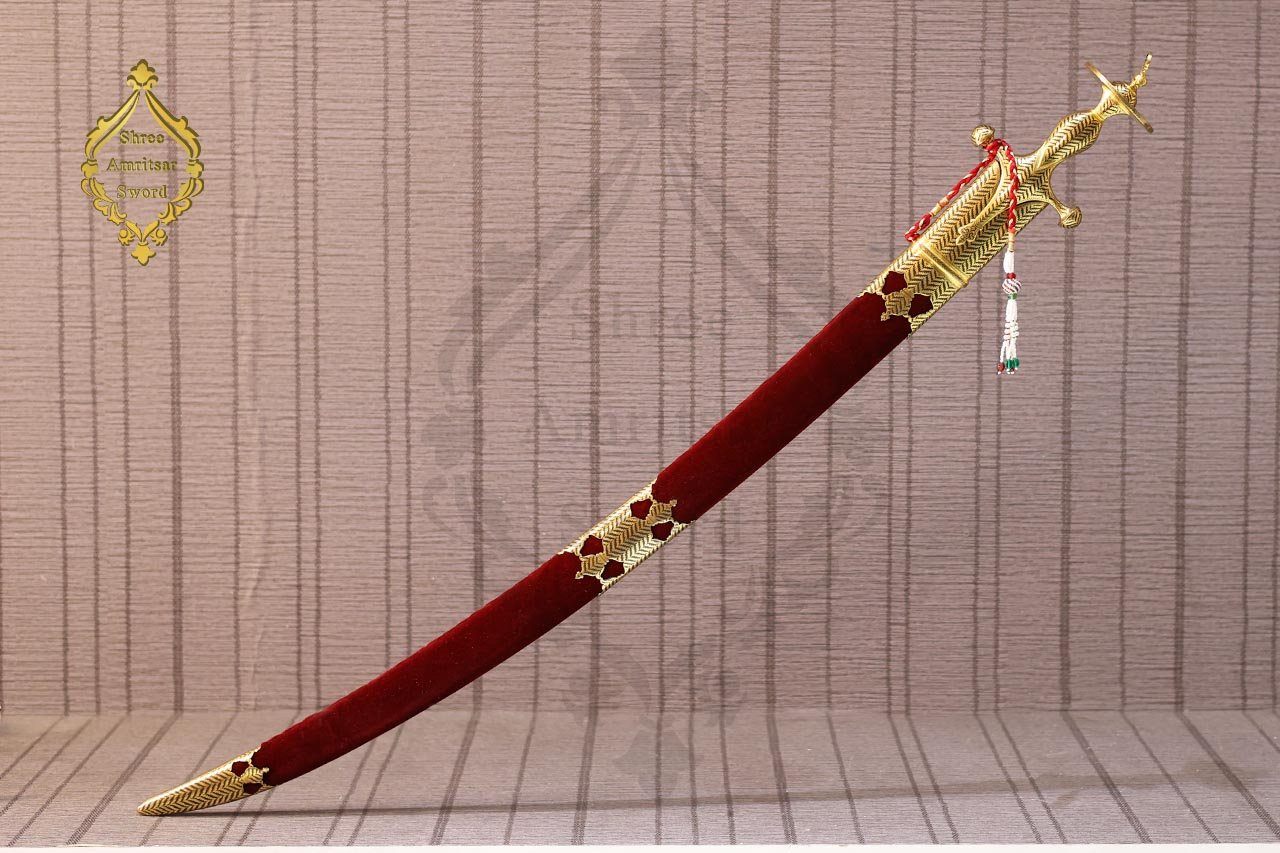
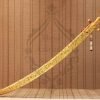
Gold Wedding Sword
We’ve covered a lot of ground. Sherwani, sehra, pagri, jutti, jewellery, dupatta. All of it important. All of it part of the picture.
But this section is different. Because nothing — nothing — does for a Punjabi groom what a ceremonial sword does.
It changes the energy of the entire baraat. It transforms your wedding portraits from beautiful to unforgettable. And for those who understand what it represents, it communicates something about you that no other accessory can.
The History Behind the Tradition
The tradition of a Punjabi groom carrying a sword dates back centuries. In ancient Punjab, weddings were multiday affairs, and the baraat travelled long distances — on horses, on foot, in bullock carts — carrying gold, jewellery, and gifts. These journeys made them targets. The sword wasn’t symbolic then. It was practical. It was protection.
Over centuries, as travel became safer, the sword’s role shifted from weapon to symbol. But what it symbolises is just as powerful: the groom’s promise to protect his family, his commitment to face whatever life brings, and his connection to the warrior culture of Punjab that produced some of history’s most formidable fighters.
Today, whether you’re a software engineer from Ludhiana or a businessman from Birmingham, carrying a sword at your wedding is a declaration. It says: I come from somewhere. I carry something forward.
What Kind of Sword Is Right for You?
This depends on your faith, your family’s tradition, and honestly — your personal style.
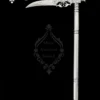
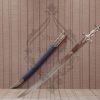
The Talwar is the classic Punjabi wedding sword. A slightly curved single-edged blade, gold or silver hilt, traditional scabbard in red, black, or gold. This is what most Punjabi Hindu grooms carry — it reflects the Kshatriya warrior heritage and the royal pride of Punjab. Whether you’re Khatri, Arora, or Rajput, the talwar is your heritage.
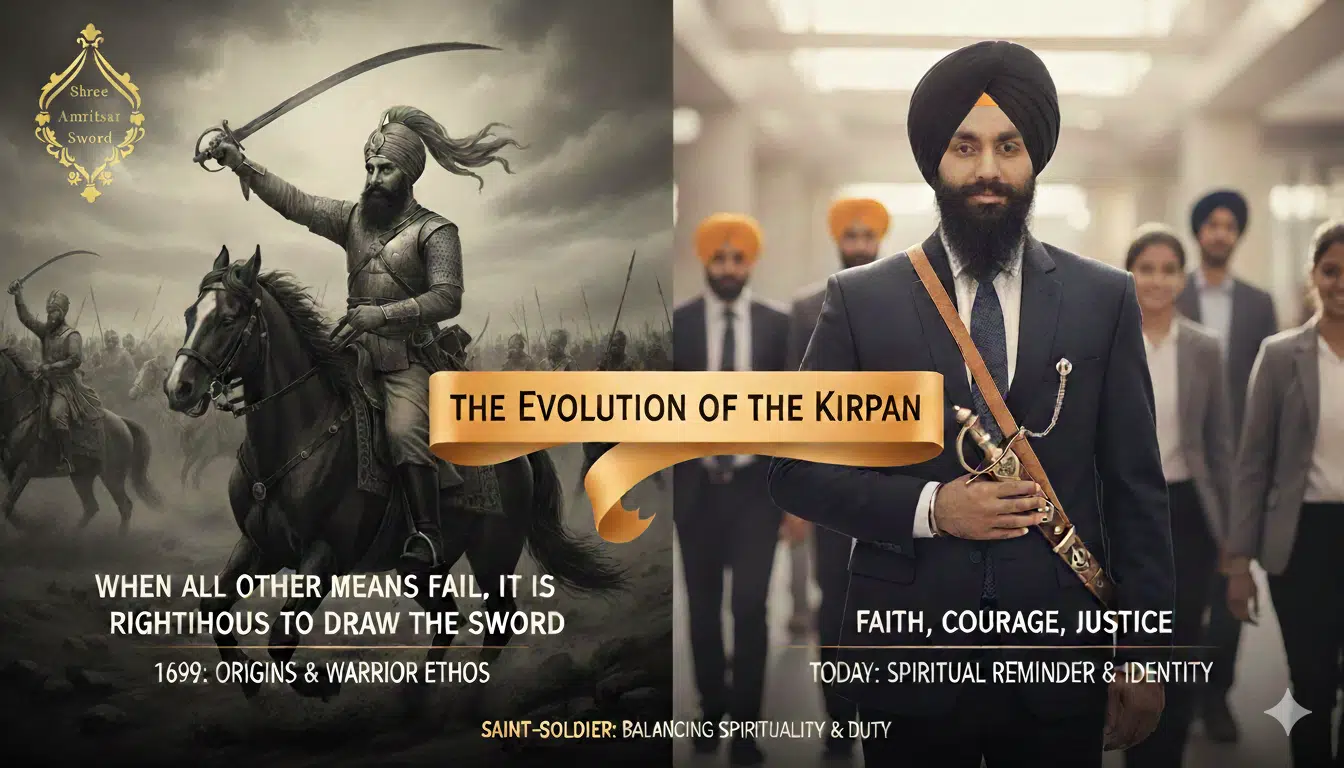
The Kirpan is sacred in Sikhism — one of the Five Kakars, and for Amritdhari Sikh grooms, it is not optional. It’s faith made physical, worn every day and honoured especially on your wedding day. The evolution of the kirpan from battlefield to ceremony is a fascinating story — and carrying it at your wedding connects you to every Sikh who came before you.
The Bhavani Talwar carries the name and blessing of the goddess Bhavani, associated with the Maratha and Rajput warrior traditions. The Bhavani Talvar in our collection features a 36-inch carbon steel blade, gold-plated hilt, and a striking red scabbard. For grooms who want something with historical weight and visual drama, this is it.
The Sikh Khanda is a double-edged straight sword that sits at the heart of Sikh symbolism. Our handcrafted Sikh Khanda features a 30-inch polished steel blade with a chrome-plated hilt. It’s a powerful, distinctive choice for grooms who want their faith front and centre on their wedding day.
Browse our full wedding sword collection here. Every piece is handcrafted in Amritsar by skilled artisans.
Which Sword Colour Matches Your Sherwani?
This is the question most grooms forget to ask until the week before the wedding. Here’s a simple guide:
| Your Sherwani | Best Sword Finish |
|---|---|
| Ivory or cream | Gold hilt + red scabbard — the classic Punjabi wedding combination |
| Maroon or burgundy | Red and gold talwar — deep, rich, perfectly coordinated |
| Navy blue | Silver or chrome finish — clean contrast that pops beautifully |
| Forest green | Gold hilt — the warm gold against green is stunning |
| Black sherwani | Gold hilt — maximum contrast, maximum impact |
| Gold or champagne | Full gold talwar — unmatched royalty, head to toe |
How to Actually Carry Your Sword on the Day
During the baraat: Hold it in your right hand, raised slightly. This is the iconic Punjabi groom image — sword up, dhol beating, family dancing around you. Every photographer knows this shot. Make sure yours is ready for it.
During the ceremony: Rest it at your left side, either held in hand or hung from a decorative sword belt. It doesn’t need to be in your hands constantly — its presence is enough.
The milni gift: In many families, the bride’s father presents the groom with a sword during the milni. If this is your tradition, the sword received becomes doubly meaningful — it’s a gift from the family you’re joining.
The cake cutting at the reception: More and more couples are cutting the wedding cake with a ceremonial sword instead of a knife. It’s dramatic, it’s photogenic, and it gets a genuine reaction from the crowd every single time.
After the wedding: Have your name and wedding date engraved on the blade. Display it in your home. Pass it down. A sword bought for a wedding and stored in a box is a missed opportunity. A sword displayed on a wall is a daily reminder of where you come from.
8. The Sehra Bandi — A Moment Worth Preparing For

Before we get to the checklist, there’s one ritual that every groom should understand and prepare for: the sehra bandi.
This is the ceremony where your sister ties the sehra on your head, the moment that officially begins your journey to the wedding venue. It’s followed by the varna ritual (protecting you from the evil eye), your bhabhi lining your eyes with surma, and the ghodi chadna mounting the horse (or car) and leaving for the venue.
If you’ve been so focused on logistics and guest lists that you haven’t thought about this moment, take a minute to think about it now. Your sister tying your sehra, your family gathered around you, the dhol starting up outside — this is one of those moments you’ll remember with extraordinary clarity for the rest of your life. Be present for it.
9. Your Complete Punjabi Groom Accessories Checklist
Use this to make sure nothing falls through the cracks. Start gathering everything at least 3–4 weeks before your wedding.
Outfit:
- Sherwani (main ceremony) — fitted and collected
- Sherwani or bandhgala for sangeet/mehndi
- Kurta-pyjama for haldi and casual pre-wedding functions
- Dupatta/stole — colour coordinated with the bride
- Churidar or salwar — hemmed to correct length
Headwear:
- Pagri fabric purchased — arranging someone to tie it fresh on the day
- Sehra ordered (3 weeks+ in advance)
- Kalghi / brooch selected
Footwear:
- Wedding jutti — already broken in at home
- Backup footwear for the reception (optional but worthwhile)
Jewellery:
- Kara — polished and ready
- Mala or kanthi — ordered if custom
- Statement ring
- Surma (kohl) for the varna ritual
The Ceremonial Sword:
- Style selected (talwar, kirpan, khanda, Bhavani talwar)
- Colour finish matched to the sherwani
- Ordered at least 2–3 weeks in advance
- Sword belt or gathra for wearing/carrying
- Engraving arranged with name + date
Where to Get Your Wedding Sword — And Why It Matters Where It Comes From
There’s no shortage of places selling decorative swords online. But a wedding sword that falls apart during your baraat, or has a hilt that looks cheap in photos, is not worth the saving.
At Shree Amritsar Sword, we make every sword by hand in Amritsar — the same city whose name has been synonymous with Sikh heritage and sword craftsmanship for centuries. Our blades are carbon steel. Our hilts are gold or silver-plated. Our scabbards are hand-stitched. And every sword we make can be custom engraved with your name, your wedding date, or your family’s motto.
We ship worldwide — to the UK, Canada, USA, Australia, UAE — with zero customs hassle. Punjabi families everywhere deserve access to the real thing, not a mass-produced replica.
Browse our complete wedding sword collection
One Last Thing
Nobody ever looks back at their wedding photos wishing they’d made safer, simpler choices. They look back wishing they’d leaned in more — more colour, more tradition, more of the things that made the day feel like their day.
The sherwani your nana wore at his wedding was special because it was his. The sword your grandfather carried meant something because it was chosen with intention. Your wedding accessories will mean exactly as much as you let them.
Wear the sehra. Choose the sword. Ride out on that ghodi like the groom your family has been waiting to celebrate.
Handcrafted in Amritsar, Punjab. Shipped worldwide with love and zero customs stress.


Leave a reply