
Shree Amritsar Sword
Why Every Traditional Punjabi Groom’s Wedding Checklist Should Include a Ceremonial Sword
A traditional Punjabi wedding involves much more than selecting a sherwani, wedding pagg or matching footwear. The groom’s ceremonial appearance brings together clothing, traditional accessories and elements of Punjabi heritage that have been associated with wedding preparations for generations.
Among these elements, the ceremonial sword holds a distinctive and important place in traditional Punjabi groom attire. For families who follow this custom, the sword is not simply another decorative accessory. It is an important part of the groom’s ceremonial presentation and deserves a place near the top of the wedding-shopping checklist.
Historically, the sword was associated with the groom’s journey to the bride’s home, particularly when travelling by horse as part of the wedding procession. Today, it continues to feature in some traditional wedding customs and ceremonial presentations.
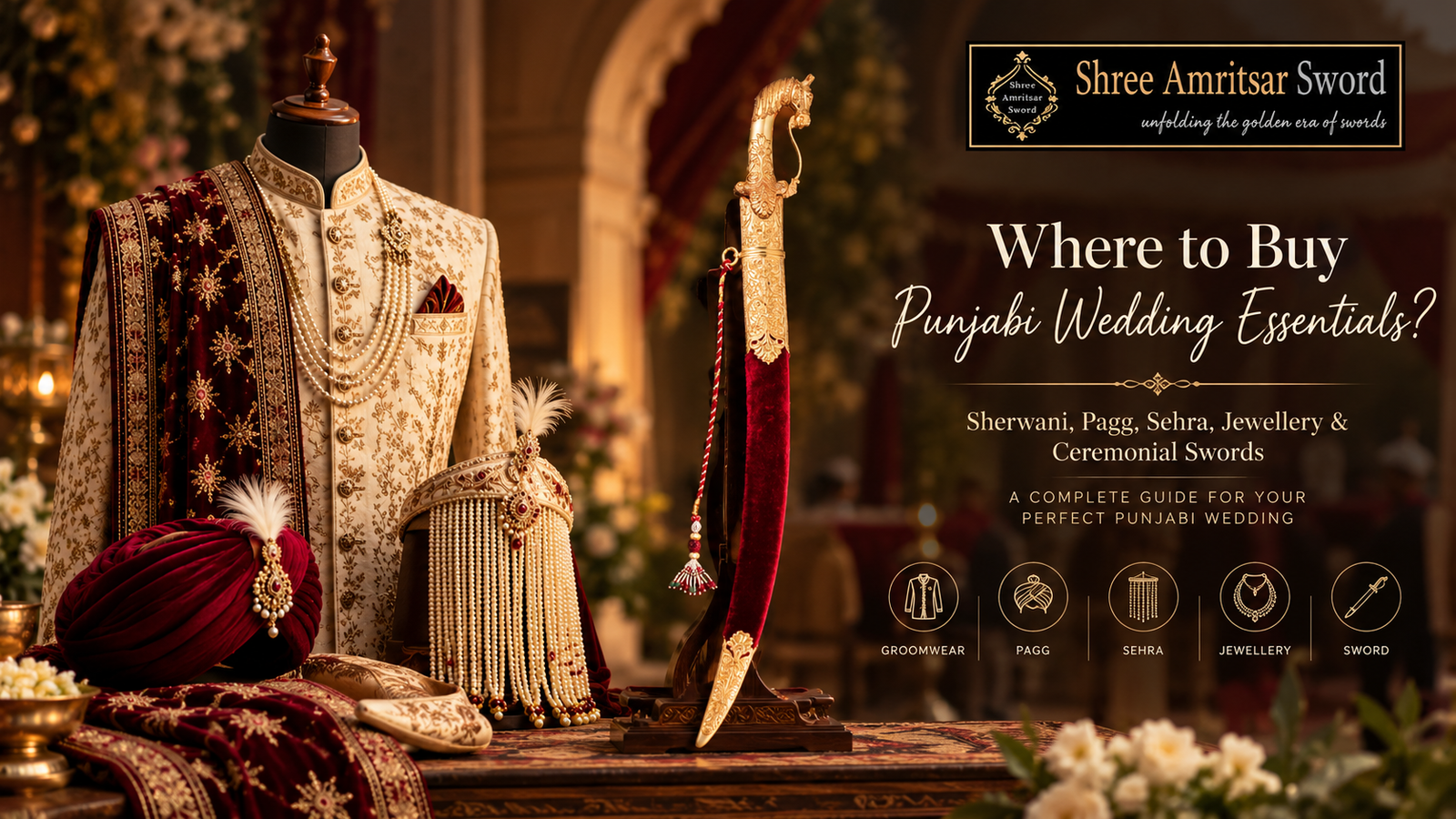
If you are planning the complete shopping list for a Punjabi wedding, our guide to where to buy Punjabi wedding essentials covers the different places to explore for sherwanis, wedding pagg, sehra, jewellery, groomwear and traditional ceremonial swords.
From understanding its cultural background to selecting the right design, this guide explains why a traditional Punjabi wedding sword deserves special attention when preparing for the groom’s wedding.
1. Why Is a Ceremonial Sword Important in a Traditional Punjabi Wedding?
The ceremonial sword has historical and cultural associations with Punjabi wedding traditions.
In earlier times, the groom traditionally travelled to the bride’s home on a mare as part of the wedding procession. Historical accounts describe the groom carrying a sword during this journey for protection.
The Sikh Missionary Society’s account of marriage customs explains that the groom traditionally carried a sword while travelling on horseback to protect himself and his bride during the journey. The horse procession later became more ceremonial as modern transportation replaced horseback travel.
Read about historical marriage customs.
Over time, the sword also became part of the traditional visual presentation of the groom in families that preserved this custom.
Today, a ceremonial sword may represent:
- Heritage: A connection with traditional Punjabi wedding customs.
- Ceremonial identity: An important element of the groom’s traditional presentation.
- Responsibility and courage: Values associated with the historical protective role of the sword.
- Tradition: The preservation of family customs across generations.
For families who include a sword in their wedding preparations, it should be considered an important ceremonial item rather than an afterthought.
2. The Wedding Sword During Sehra Bandi and Ghodi Chadhi
One of the clearest examples of the sword’s connection with Punjabi wedding preparations is Sehra Bandi and Ghodi Chadhi.
Sehra Bandi traditionally takes place at the groom’s home before the baraat leaves for the wedding venue. Family members participate in preparing the groom for his departure, including tying the turban and arranging the sehra.
Descriptions of this Punjabi wedding custom also include presenting the groom with a ceremonial sword before the wedding procession begins.
A Punjabi wedding-planning guide describes the sequence of turban tying, sehra placement, presentation of the sword and the groom mounting the decorated mare before the baraat sets off.
Read the Sehra Bandi and Ghodi Chadhi wedding guide.
Customs differ between families and communities, so this should not be treated as a universal requirement. For families who follow the tradition, however, the sword deserves an important place in the groom’s wedding preparations.
3. Why Should the Wedding Sword Be on the Groom’s Shopping Checklist?
Wedding shopping often begins with the main outfit, followed by jewellery, footwear and matching accessories. However, families following traditional Punjabi customs should plan the ceremonial sword alongside these purchases.
There are several practical reasons for doing so.
It Completes the Traditional Ceremonial Appearance
The groom’s traditional look may include a sherwani, pagg, sehra, kalgi and a ceremonial sword. Each element contributes to the overall presentation.
Selecting the sword early allows families to consider its design and appearance alongside the rest of the outfit.
It Is Often Sourced Separately
A sherwani designer or wedding boutique may provide clothing and certain accessories, but a traditional ceremonial sword generally requires a specialist retailer.
Finding the right supplier and design may take additional time.
It Is Part of the Wedding-Day Preparation
If the family intends to present a sword during the groom’s traditional preparations, the item needs to be available before the baraat departs.
Ordering early gives families time to check the product, confirm delivery and coordinate the wedding arrangements.
It Can Become a Family Keepsake
Some families preserve ceremonial wedding items as reminders of important occasions. A traditional sword may become one of those keepsakes, particularly when it is selected with attention to craftsmanship and family preferences.
4. How to Choose the Right Punjabi Wedding Sword
Not every sword design will suit every groom or wedding outfit. The selection should take into account traditional preferences, appearance, construction and intended use.
Traditional Sword Design
Explore designs inspired by traditional Indian and Punjabi sword craftsmanship. Consider the overall shape, ornamental detailing and suitability for the wedding’s cultural setting.
Handle and Decorative Work
The handle contributes significantly to the sword’s appearance. Look at its detailing, finish, materials and overall craftsmanship.
Sword Sheath
The sheath is an important part of the complete presentation. Consider its construction, color, finish and decorative details.
Size and Weight
Consider the product’s dimensions and weight according to its intended use. Comfort and safe handling matter when the sword is carried or displayed during wedding photography.
Intended Purpose
Before ordering, establish whether the particular product is decorative, ceremonial or functional. Check its specifications and applicable legal and venue requirements.
5. How Does a Wedding Sword Complement the Groom’s Sherwani, Pagg and Sehra?
A traditional Punjabi groom’s appearance is built around several elements that should be considered together.
For a complete breakdown of these elements, including the sherwani, sehra, pagri, jutti, jewellery and ceremonial sword, read our complete groom wedding accessories guide.
Sherwani: The sherwani establishes the main clothing style. The sword’s design should complement its overall appearance.
Pagg: The wedding turban is another defining element of traditional Punjabi groom styling. Its color and decorative details contribute to the complete look.
Sehra: When the family follows Sehra Bandi customs, the sehra forms part of the groom’s ceremonial preparations.
Kalgi: A decorative kalgi may complement the groom’s turban and other accessories.
Ceremonial sword: The sword adds a distinctive traditional element to the groom’s presentation, particularly during the wedding preparations and baraat photographs.
Instead of selecting all these items independently, consider how they will appear together. This helps create a coordinated appearance without making the accessories compete with one another.
6. Where Can You Buy a Traditional Punjabi Wedding Sword?
Because ceremonial swords require different considerations from ordinary wedding accessories, families may prefer to explore specialist sword retailers.
Shree Amritsar Sword is a destination to research when looking for traditional and ceremonial sword designs.
The collection can be explored at:
Shree Amritsar Sword – Official Website
When comparing traditional wedding swords, examine the product photographs and specifications carefully. Pay attention to the handle, sheath, finish, dimensions and intended use.
Before placing an order, confirm product availability, the final price, dispatch arrangements and whether the design is suitable for the intended wedding occasion.
7. The Complete Traditional Punjabi Groom’s Wedding Checklist
A wedding-shopping checklist helps families organize everything required for the groom’s preparations.
For families whose traditions include a ceremonial sword, the sword should be placed among the first items considered when planning the ceremonial accessories.
| Priority | Item | What to arrange |
|---|---|---|
| 1 | Ceremonial wedding sword | Design, handle, sheath and availability |
| 2 | Wedding pagg | Turban fabric, tying style and color |
| 3 | Sehra | Design, materials and attachment |
| 4 | Kalgi | Decorative turban ornament |
| 5 | Sherwani | Fabric, measurements and embroidery |
| 6 | Shawl or stole | Matching color and decorative work |
| 7 | Jewellery | Mala and other suitable accessories |
| 8 | Footwear | Punjabi jutti or traditional shoes |
The order is a suggested planning priority for families following sword-related customs, not a universal sequence for every wedding.
The main idea is to ensure that the sword is not forgotten while arranging the other elements of the groom’s ceremonial attire.
8. Ceremonial Wedding Sword and Sikh Kirpan: Understanding the Difference
An important distinction should be understood when researching traditional wedding swords.
A ceremonial sword purchased as part of wedding attire is not automatically the same as a Sikh kirpan.
The kirpan is one of the five articles of Sikh faith, known as the Panj Kakaar. It has religious significance and should not be treated merely as a fashion accessory.
Read the Sikh Coalition’s explanation of the kirpan.
A decorative or ceremonial sword may instead be selected for a family’s traditional wedding presentation. Families should understand the distinction and follow the appropriate religious guidance and applicable requirements.
9. When Should You Order a Wedding Sword?
Wedding preparation involves several suppliers and different delivery schedules.
A sword should be researched early, particularly when a family wants a particular design or finish.
Consider the following:
- Finalize the intended design before the wedding preparations become too busy.
- Confirm the dimensions, materials, handle and sheath.
- Ask about availability and dispatch time.
- Check the delivery before the ceremony.
- Keep the product safely stored until the wedding.
- Confirm venue rules and appropriate ceremonial arrangements.
Planning in advance reduces the possibility of last-minute changes and allows the sword to be included properly in the groom’s preparations.
Frequently Asked Questions About Punjabi Wedding Swords
Why does a Punjabi groom carry a sword?
Historically, the groom carried a sword while travelling to the bride’s home, particularly during horseback wedding processions. It had a protective association and later became part of traditional ceremonial presentation in families that maintain this custom.
Is a ceremonial sword an important part of a traditional Punjabi wedding?
For families following customs involving a wedding sword, it is an important part of the groom’s ceremonial attire. It is associated with traditional groom preparations and, in some customs, Sehra Bandi and the departure of the baraat.
Is a sword presented during Sehra Bandi?
Some descriptions of Punjabi Sehra Bandi and Ghodi Chadhi preparations include presenting a ceremonial sword to the groom alongside the tying of the turban and placement of the sehra.
Where can I buy a traditional Punjabi wedding sword?
You can explore specialist retailers such as Shree Amritsar Sword for traditional and ceremonial sword designs. Always check the specific product details and intended use.
What should I check before purchasing a wedding sword?
Consider its design, handle, sheath, material, dimensions, weight, finish and intended use. Also verify availability, delivery arrangements and applicable legal or venue requirements.
Should the wedding sword match the groom’s sherwani?
It is useful to coordinate the sword’s design and overall appearance with the groom’s sherwani, pagg and other ceremonial accessories. Exact color matching is not necessary; the aim is a balanced traditional look.
Is a ceremonial wedding sword the same as a Sikh kirpan?
No. A decorative ceremonial sword and the Sikh kirpan are different in purpose and significance. The kirpan is an article of Sikh faith and carries religious obligations.
Final Thoughts: Make the Ceremonial Sword Part of Your Wedding Planning
A traditional Punjabi wedding brings together clothing, heritage and ceremonial customs. The sherwani, pagg, sehra, kalgi and other accessories all contribute to the groom’s appearance, but for families who preserve the tradition of the wedding sword, it deserves special attention.
The sword is connected with historical wedding journeys, traditional groom preparations and the ceremonial presentation before the baraat. Its place in these customs makes it an important item to consider when preparing the groom’s complete wedding attire.
Rather than treating it as a last-minute decorative purchase, include the ceremonial sword early in your wedding-shopping checklist.
For families researching traditional and ceremonial sword designs, Shree Amritsar Sword is a specialist destination to explore.
Explore the Shree Amritsar Sword collection
Sources and Further Reading
- Sikh Missionary Society – Marriage Customs and the Historical Groom’s Sword
- Punjabi Wedding Organizer – Sehra Bandi and Ghodi Chadhi
- Sikh Coalition – Sikhism and Sikh Kirpan Factsheet
- Shree Amritsar Sword – Traditional and Ceremonial Swords
Editorial note: Punjabi wedding customs vary by family and community. The article discusses traditional and social wedding practices, not compulsory religious requirements. A ceremonial sword should not be represented as a substitute for a Sikh kirpan.




Leave a reply